Brass Care & Metal Knowledge
Why Do Copper, Brass and Bronze Change Colour Over Time? Understanding Patina
Have you noticed your copper, brass or bronze products changing colour over time? Discover what patina is, why it develops and how simple care can help maintain the natural beauty of your favourite metalware.
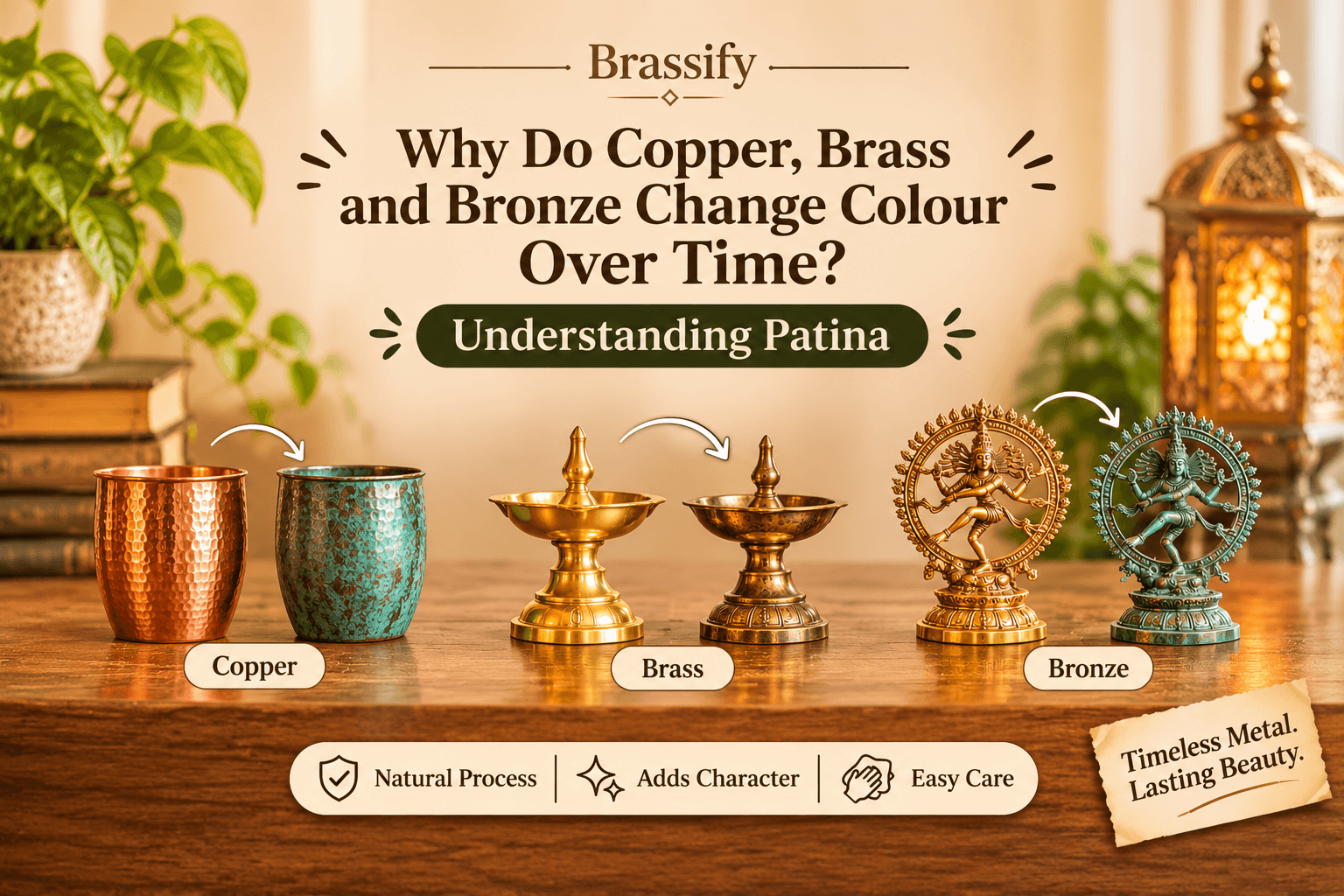
Why Do Copper, Brass and Bronze Change Colour Over Time? Understanding Patina.
Have you ever noticed that a beautiful brass diya slowly becomes darker, a copper vessel develops a brownish shade, or a bronze decorative piece starts showing different colours?
If you have, there is no need to worry. This is a natural process that happens to many metal products over time.
The colour change is often caused by something called patina. It may sound complicated, but it is simply the natural surface layer that develops when certain metals react with their surroundings.
In this blog, let's understand why copper, brass and bronze change colour, what patina really means and how you can take care of your favourite metalware.
1. What Is Patina?
Patina is a natural layer that develops on the surface of metals as they react with air, moisture and other environmental elements.
Over time, this reaction can change the original appearance of copper, brass and bronze.
Depending on the metal and its surroundings, patina may appear as:
- A darker brown or reddish shade.
- A dull or slightly greenish surface.
- Dark patches or uneven colouring.
- A soft, aged appearance.
For some people, this aged finish adds character and beauty. Others prefer the bright, polished look of new metalware.
Both preferences are perfectly fine. Patina is simply one of the ways metal changes with age.
2. Why Does Copper Change Colour?
Copper is known for its warm, reddish-orange appearance. However, when exposed to air and moisture, its surface gradually reacts with the environment.
Initially, copper may become darker or develop a brownish layer. With longer exposure to outdoor conditions, especially moisture and pollutants, it can sometimes develop a green or blue-green patina.
You may have noticed this effect on old copper roofs, statues and architectural decorations.
Does this mean copper is losing its beauty?
Not necessarily. It is a natural surface reaction, and the colour change does not automatically mean the product is damaged.
3. Why Does Brass Become Dark or Dull?
Brass is an alloy mainly made from copper and zinc. Its familiar golden colour makes it a popular choice for diyas, pooja thalis, bowls, decorative items and home accessories.
However, brass can gradually lose some of its shine when exposed to air, moisture, fingerprints and everyday handling.
You may notice:
- A darker golden appearance.
- Brownish patches on the surface.
- Loss of its original brightness.
- Slightly uneven colouring.
Regular handling and contact with oils or moisture can make these changes more noticeable.
The good news is that suitable cleaning and polishing can often help restore the brightness of brass.
4. Why Does Bronze Develop a Different Finish?
Bronze is primarily an alloy of copper and tin. It is appreciated for its rich, warm colour and traditional appearance.
Like copper and brass, bronze reacts with its surroundings over time.
Its surface may develop darker brown shades or, under certain conditions, greenish or bluish patina.
Many decorative bronze objects and sculptures are valued for their aged appearance. In fact, some finishes are intentionally created to give bronze products an antique look.
This is why an aged bronze piece can look very different from a newly polished one.
5. What Causes Patina to Develop Faster?
Although colour changes happen naturally, certain conditions can speed up the process.
Moisture and humidity: Metal surfaces exposed to moisture frequently may develop surface changes more quickly.
Air exposure: Oxygen and other substances in the atmosphere react with metal surfaces over time.
Fingerprints and oils: Natural oils from our hands can leave marks and cause uneven colouring.
Cleaning products: Harsh chemicals, abrasive scrubbers and unsuitable cleaners may affect the metal's surface or finish.
Storage conditions: Keeping metalware in damp or poorly ventilated places can encourage unwanted surface changes.
A little attention to storage and cleaning can make a noticeable difference.
6. Is Patina Good or Bad?
This is one of the most common questions customers have.
The answer depends on the product and the look you prefer.
Natural patina is often appreciated because it gives metalware an aged, traditional character. Many antique-style brass and bronze products are designed to have a darker finish.
However, if you prefer a bright golden or reddish shine, you may want to clean and polish your products periodically.
One important thing to remember: not every colour change is harmless patina. Green deposits, powdery corrosion, peeling coatings or unusual surface damage may need special attention.
For food-contact products, always follow the manufacturer's cleaning and use instructions.
7. Simple Ways to Care for Copper, Brass and Bronze
You do not need an elaborate routine to look after your metalware. A few simple habits can help maintain its appearance.
Clean after use: Wipe away moisture, fingerprints and food residue using a soft, clean cloth.
Keep products dry: Avoid leaving water on metal surfaces for long periods.
Use gentle cleaning methods: Choose a cleaner suitable for the particular metal and its finish.
Avoid harsh scrubbing: Steel wool, rough scrubbers and strong chemicals can scratch or damage the surface.
Store carefully: Keep your metalware in a dry place and avoid prolonged exposure to humidity.
Check the finish first: Lacquered, coated, antique-finish and polished products may require different care methods.
Always test a cleaning method on a small, inconspicuous area first. Avoid aggressive home remedies, especially on coated or decorative finishes.
8. Should You Remove Patina or Keep It?
There is no single right answer.
If you love the original shine of your brass diya or copper vessel, suitable cleaning and polishing may help maintain that appearance.
But if you enjoy the traditional, aged look of antique brass or bronze décor, you may prefer to preserve its natural finish.
The important thing is to understand the finish of your product before cleaning it.
For example, polishing an intentionally antique-finished product may remove the very appearance that makes it special.
The Beauty of Metals That Age With Time
Copper, brass and bronze are more than just materials. They carry a connection to traditional craftsmanship, everyday rituals and beautiful home décor.
Their colours may change with time, but that is part of their natural character.
At Brassify, we appreciate the beauty of handcrafted metalware and the craftsmanship behind every piece. Whether you prefer the bright shine of polished brass, the warm look of copper or the rich character of bronze, proper care helps you enjoy your collection for years to come.
Explore Brassify's collection of handcrafted brass, copper and bronze products and bring timeless metal craftsmanship into your home.